September 24, 2013

What is collaborative learning?

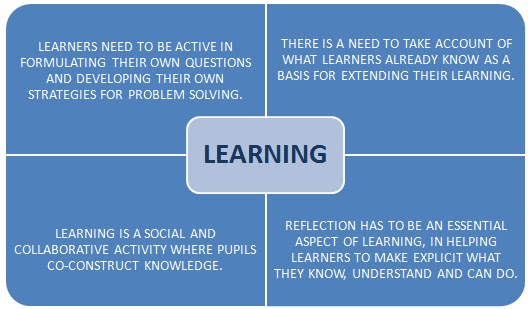
Collaborative learning is an umbrella term for a variety of educational approaches involving joint effort by learners. Collaborative learning activities vary widely, but most centre on the learner’s exploration or application of the curriculum, not simply on the teacher’s presentation of it. The teacher’s role is to create an environment where young people are willing and able to work collaboratively, where there are plenty of opportunities and stimulating contexts for learners to work with others, and where they feel safe to share their emerging ideas and understandings. 
Usually, learners are working in groups of two or more, searching mutually for understanding, solutions, meanings, or creating a product. Group challenges often require learners to produce a product for a specified audience and purpose. Collaborative learning programmes also place great emphasis on assessing the contribution of individuals within the group and of the performance of the team. 
In collaborative learning situations, pupils are not simply taking in new information or ideas - they are creating something new with the information and ideas.
American researchers David and Roger Johnson have done more than anyone to popularise the concept of collaborative learning. Their research identified 700 studies relating to cooperative, competitive and individualistic efforts to learn and they identified five defining characteristics of cooperative learning. 
1. Groups work together to accomplish shared goals. Group members buy into a mutual goal. They seek outcomes that are valuable for themselves and the group. They believe they sink or swim together. 
2. Group members are hard on themselves and each other - they make each other accountable for producing high quality work and achieving goals. 
3. Group members work face to face and support each other to produce joint products. 
4. Group members are taught social skills and are expected to use them to work together to achieve their goals. 
5. Group members analyse how effectively they are working together in achieving their goals.

Johnson and Holubec (ASCD, 1994)

September 20, 2013

Interesting ans useful material. Go HERE to the website.

August 29, 2013

Training teams of teachers


With a 'board game' the team of teachers gives answers on different questions or dilemmas. Together the colleagues determine which Dalton aspects are highly developed and which ones need attention again.

More information HERE

August 27, 2013

Little Dalton - Hong Kong

Little Dalton in Hong Kong is a new leaf on our International Dalton tree.

The school is cooperating with Ascham in Sydney.

Visit the website of Little Dalton HERE

August 23, 2013

Reflection

The last two decades have seen substantial growth in the use of reflection, not only in classrooms from elementary education but also in colleges and universities.
Dewey is generally pointed to as the scholar who first stressed the importance of reflection for learning.

Effective teachers are those who constantly reflect on their teaching.
Reflecting after a lesson makes them aware of their successes and failures, of their strengths and shortcomings. This allows teachers to assess and adjust their teaching. Because reflection can help teachers become better educators.

And a good educator organizes reflection in the classroom, 
The work of children should be regularly evaluated. But if the teacher teaches kids how to reflect, then they become owners of their learning process.


August 22, 2013

"Many schools are preparing children for yesterday"

The first of 11 Dutch ‘Steve Jobs schools’ was opened yesterday in Sneek/the Netherlands..
In this elementary school the Ipad is textbook, notebook, agenda and plaything at the same time. The pupils are learning typing instead of writing and they decide themselves where and when they study.
The zombies on the Ipad screen come menacingly closer. If the answer to the calculation not fast enough is typed, you're the Marylou.
At the right answer the zombie changes in a cheerful smiling stick man.
The children like it. "Zombie counting is much more fun than writing in a boring notebook".
A group of girls demonstrates the apps connected in their subject matter.
The little fingers go flying and agile across the screen. Last year they were still with books and notebooks for their nose at school. Now they sit in Sneek in a brand new building with the name "Master Steve Jobs School".
Which previously feared to find a surreal, sterile Apple Lab, will be disappointed. The cosy building has the decor of an ordinary primary school.
The books are just a side issue. The Ipad is the device.
The teacher is called here a 'talent coach' and the school is a 'community '.

The students are not following central classroom lessons, but work independently in groups which are classified by age and social development. With the Ipad, they have access to the digital learning environment. They get short instructions and after it they go for their work individually.  They organize their time themselves and can therefore do much at home.
Initiator Maurice de Hond believes that the traditional education is not following the actual development: “Many schools are preparing the children for yesterday. We prepare them for the world after 2030. The profit lies in the integrated approach”.
His concept of ‘Education for a New Age’ (E4NA) gets much commotion.
The German memory researcher Manfred Spitzer calls it a form of child abuse. But the reaction of the school: "We teach children to use the Ipad on a sensible way. There is a generation that missed the IT development".
The students are not following central classroom lessons, but work independently in groups which are classified by age and social development. With the Ipad, they have access to the digital learning environment. They get short instructions and after it they go for their work individually.  They organize their time themselves and can therefore do much at home.

The Minister of Education sees above all the benefits of this teaching method, but he ordered additional monitoring of the Inspectorate of Education.
Pupils must not suffer as a result of experimentation. Also this school must comply with the normal learning objectives and must test the results.

From an article in Algemeen Dagblad, Thursday August 22 , 2013