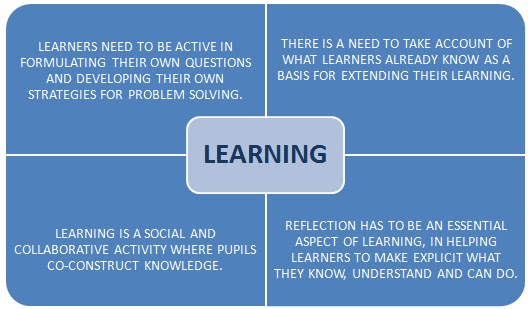
Collaborative learning is an umbrella term for a variety of educational approaches involving joint effort by learners. Collaborative learning activities vary widely, but most centre on the learner’s exploration or application of the curriculum, not simply on the teacher’s presentation of it. The teacher’s role is to create an environment where young people are willing and able to work collaboratively, where there are plenty of opportunities and stimulating contexts for learners to work with others, and where they feel safe to share their emerging ideas and understandings.
Usually, learners are working in groups of two or more, searching mutually for understanding, solutions, meanings, or creating a product. Group challenges often require learners to produce a product for a specified audience and purpose. Collaborative learning programmes also place great emphasis on assessing the contribution of individuals within the group and of the performance of the team.
In collaborative learning situations, pupils are not simply taking in new information or ideas - they are creating something new with the information and ideas.
American researchers David and Roger Johnson have done more than anyone to popularise the concept of collaborative learning. Their research identified 700 studies relating to cooperative, competitive and individualistic efforts to learn and they identified five defining characteristics of cooperative learning.
1. Groups work together to accomplish shared goals. Group members buy into a mutual goal. They seek outcomes that are valuable for themselves and the group. They believe they sink or swim together.
2. Group members are hard on themselves and each other - they make each other accountable for producing high quality work and achieving goals.
3. Group members work face to face and support each other to produce joint products.
4. Group members are taught social skills and are expected to use them to work together to achieve their goals.
5. Group members analyse how effectively they are working together in achieving their goals.
Johnson and Holubec (ASCD, 1994)